
This event has already passed. Please check our homepage for upcoming events.
Dyslexia Advocate Fellowship Program 2026
About the Fellowship
The Africa Dyslexia Advocate Fellowship is a pan-African initiative created to equip passionate individuals with the knowledge, tools, and confidence to become grassroots dyslexia advocates in their communities. Our mission is to shift mindsets, dismantle stigma, and promote inclusive education by training local champions who understand the unique educational needs of individuals with dyslexia and related learning differences.
Applications Now Open for the 2026 Cohort
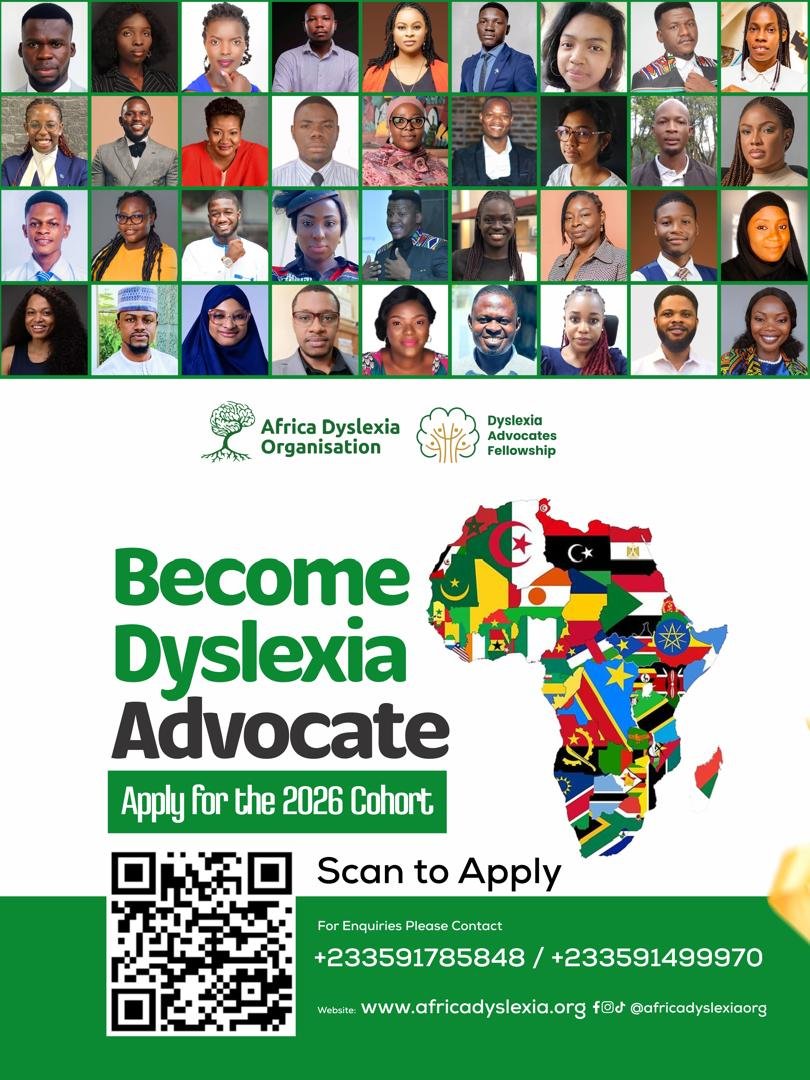
We are excited to recruit the second cohort of Africa Dyslexia Advocates. Our 2026 vision includes:
- Selecting committed fellows from each of Africa’s 54 countries
- Building a powerful continental network of grassroots leaders
- Driving nationwide awareness and policy shifts to better support individuals with dyslexia
Important Note: Voluntary, Non-Paid Program
The ADAF is a voluntary fellowship.
There is no financial compensation or funding for individual projects during the program. However, the value of the fellowship lies in the:
✅ World-class training
✅ Professional development
✅ Continental recognition
✅ Networking with peers and experts
✅ Advocacy opportunities at national and regional levels
Fellows are expected to demonstrate leadership, initiative, and community resource mobilization.
What Makes This Fellowship Unique
✅ World-Class Training: Learn from leading global experts in learning differences, inclusive education, and community advocacy.✅ Continental Recognition: Become theofficial representative of the Africa Dyslexia Organization in your country.
✅ Networking Opportunities: Join a pan-African network of passionate changemakers working toward inclusive education.
✅ Leadership Development: Gain professional experience in public engagement, policy influence, and grassroots mobilization.
✅ Certificate of Completion: Graduates receive a formal certificaterecognizing their training and commitment.
✅ Platform for Visibility: Your work will be amplified through ADO’s channels, increasing your exposure as an advocate.
✅ Mentorship Opportunities: Become a mentor for future cohorts and build long-term influence in your field.
✅ Exclusive Access: Participate in special learning sessions, collaborative projects, and advocacy campaigns across Africa.
Fellowship Journey and Key Milestones
Training Phase – February to March 2026 (2 months virtual)
- Bi-Weekly Virtual sessions and peer collaboration
- Mandatory 80% attendance and participation
- Completion of two mandatory community-based projects as part of training, guided by ADO
Successful completion of this phase is required to graduate as a Certified Africa Dyslexia Advocate.
Active Fellowship – April 2026 to March 2028 (2 years)
After graduation, fellows will:
- Lead a minimum of 2 advocacy projects annually
- Represent ADO in national initiatives and forums
- Share regular progress reports and impact updates
- Mentor future advocates and support broader campaigns ADO HQ embarks on
Who Should Apply?
We welcome applicants from all sectors and professional backgrounds, including:
- Education
- Journalism & Media
- Health & Mental Health
- Public Policy
- Social Work & Civil Society
- Business & Social Enterprise
You do not need to be a dyslexia expert—just someone with a passion for inclusion, a track record of community engagement, and thewillingness to lead.
Eligibility Criteria
To be considered, applicants must:
- Be aged 18–55
- Have completed at least post-secondary or vocational education
- Have a minimum of 1 year of work and 1 year of volunteer experience
- Commit to2 years of service after training
- Demonstrate a strong alignment with ADO’s mission and values
- Be available for training sessions and community-based activities
Application & Selection Process
🗓 Deadline: 30th July, 2025
📋 Submit your full application through our official form
What’s required:
- Updated CV
- A 2-minute video sharing your motivation and vision
- Written answers addressing:
- Why you want to join the fellowship
- Your advocacy or volunteer experiences
- A team collaboration example and what you learned
- Your strategy for creating local impact
✅ Shortlisted applicants will be invited for an interview in October–November 2025
✅ Final candidates will be selected based on passion, potential, and alignment with ADO’s goals
Together, We Will Shift Minds and Inspire Action
The Africa Dyslexia Advocate Fellowship is not just a program. It is a movement to redefine education across Africa, call to action for passionate, committed individuals to stand up for learning differences and inclusivity.
Be the voice. Be the change. Be a 2026 Africa Dyslexia Advocate.
Frequently Asked Questions (FAQs)
The Africa Dyslexia Advocate Fellowship (ADAF) is a voluntary pan-African programled by the Africa Dyslexia Organization. It equips passionate individuals with the skills, tools, and networks to raise awareness, advocate for inclusive education, and support individuals with dyslexia and related learning differences across Africa.
No. The ADAF is a voluntary and unpaid fellowship. The program does not offer financial compensation or provide funding for projects. Fellows are expected to creatively mobilize local resources and partnerships for their advocacy work.
While it is unpaid, the fellowship offers substantial non-monetary value:
- Certified training by global experts in dyslexia and advocacy
- Recognition as an official advocate of the Africa Dyslexia Organization
- Access to a growing pan-African network of changemakers
- Leadership development and public speaking opportunities
- Visibility on ADO platforms and media engagements
- Mentorship and continuous learning
- Professional experience in grassroots mobilization and community impact
Applicants must meet the following criteria:
- Aged 18 to 55
- Have at least post-secondary or vocational education
- Have a minimum of one year of work experience and one year of volunteer experience
- Be able to commit to two years of voluntary serviceafter the training
- Be passionate about inclusion, community engagement, and education
No. While a background in education, healthcare, media, or public policy is helpful, it is not required. What matters most is your passion, commitment, and potential to make an impact in your community.
The fellowship is delivered in two main phases:
- Training Phase (February–March 2026):
A virtual 2-month program with live sessions, assignments, and collaborative projects. Fellows must attend at least 80%of the sessions and complete two mandatory community-based training projectsto graduate. - Advocacy Phase (April 2026–March 2028):
Graduated fellows will lead a minimum of two advocacy projects per yearin their communities, represent ADO locally, and participate in ongoing training and reporting.
During training, fellows must design and implement two short, impactful projects within their communities. These projects are designed to demonstrate their learning, build confidence, and prepare them for long-term advocacy. These are not the same as the projects required during the two-year fellowship.
Only fellows who complete both mandatory training projects and maintain at least 80% attendance and active participationwill be certified as Dyslexia Advocates and qualify to begin the two-year fellowship. Those who do not meet the requirements will not graduate or proceed to the advocacy phase.
- Organizing dyslexia awareness campaigns in schools or communities
- Hosting workshops or panel discussions
- Engaging media and influencers to spotlight learning differences
- Collaborating with educational institutions or policymakers
- Creating support groups for families and individuals with dyslexia
- Complete the online application form by July 30th, 2025
- Submit your CV and a 2-minute video sharing your motivation
- Provide detailed written responses to a few key questions
- Shortlisted applicants will be invited for an interviewwith the ADO team
👉 Apply Now
Dyslexia Advocate Fellowship Program 2026 – Official Timeline
- April 15, 2025: Fellowship officially announced
- April 15 – May 18, 2025: Pre-application outreach via partners, social media, and email campaigns
- May 10–18, 2025: Live Q&A sessions and info webinars for interested applicants
- May 19, 2025: Application portal opens
- May 19 – June 30, 2025: Promotional push across all platforms and applicant engagement
- June 30, 2025 (11:59 PM GMT): Application deadline – no late submissions accepted
- July 1–15, 2025: Application screening and shortlisting
- July 16 – September 30, 2025: Virtual interviews with shortlisted applicants
- October 2025:Final selections and approvals
- November 10, 2025: Selected fellows are notified
- November 15–30, 2025: Onboarding materials, welcome orientation guide, and tech setup support sent to fellows
- February 5, 2026: Official training kickoff and cohort orientation
- February 10 – March 25, 2026:Weekly virtual training sessions and collaborative peer learning
- February–March 2026: Fellows implement 2 mandatory community-based training projects
- March 25–31, 2026: Fellowship graduation, certification, and induction into active advocacy
- April 1, 2026: Official start of the two-year voluntary service
- Fellows are expected to:
- Complete at least 2 advocacy projects per year
- Submit quarterly progress reports
- Engage in continued learning, mentorship, and media activities
- March 2028: Program concludes with final review, celebration, and transition into the alumni network
- Fellows are expected to:
- Join the Africa Dyslexia Advocate Alumni Network
- Mentor new fellows
- Continue advocacy through ADO-led initiatives
- Contribute to national and continental campaigns for inclusive education
Dyslexia Advocate Fellowship Program 2026 – Official Timeline
📍 PHASE 1: Promotion & Awareness Campaign
April – May 2025
- April 15, 2025: Fellowship officially announced
- April 15 – May 18, 2025: Pre-application outreach via partners, social media, and email campaigns
- May 10–18, 2025: Live Q&A sessions and info webinars for interested applicants
📍 PHASE 2: Application Period
May 19 – June 30, 2025
- May 19, 2025: Application portal opens
- May 19 – June 30, 2025: Promotional push across all platforms and applicant engagement
- June 30, 2025 (11:59 PM GMT): Application deadline – no late submissions accepted
📍 PHASE 3: Screening & Selection
July – November 2025
- July 1–15, 2025: Application screening and shortlisting
- July 16 – September 30, 2025: Virtual interviews with shortlisted applicants
- October 2025:Final selections and approvals
- November 10, 2025: Selected fellows are notified
- November 15–30, 2025: Onboarding materials, welcome orientation guide, and tech setup support sent to fellows
📍 PHASE 4: Training Phase
February – March 2026
- February 5, 2026: Official training kickoff and cohort orientation
- February 10 – March 25, 2026:Weekly virtual training sessions and collaborative peer learning
- February–March 2026: Fellows implement 2 mandatory community-based training projects
- March 25–31, 2026: Fellowship graduation, certification, and induction into active advocacy
📍 PHASE 5: Fellowship Advocacy Period
April 2026 – March 2028
- April 1, 2026: Official start of the two-year voluntary service
- Fellows are expected to:
- Complete at least 2 advocacy projects per year
- Submit quarterly progress reports
- Engage in continued learning, mentorship, and media activities
- March 2028: Program concludes with final review, celebration, and transition into the alumni network
📍 Post-Fellowship Alumni Engagement
From April 2028
- Join the Africa Dyslexia Advocate Alumni Network
- Mentor new fellows
- Continue advocacy through ADO-led initiatives
- Contribute to national and continental campaigns for inclusive education
Dyslexia Advocate Fellowship Program
The Africa Dyslexia Advocate Fellowship’s mission is to amplify awareness and advocacy about dyslexia and related learning differences across Africa. We aim to equip educators and individuals from other fields of engagements with the tools to support students with diverse learning needs, drive impactful research on dyslexia, engage with educational agencies, foster a knowledgeable and proactive community, and empower individuals to champion the cause of dyslexia in Africa.
Our fellowship engages impact makers to be grassroots advocates in their communities.
To further our mission, we are excited to open application the Dyslexia Advocate Fellowship Program 2025 cohort.
In this second cohort, we have set our sights on:
- Recruiting two dedicated individuals from each of the 54 African countries.
- Cultivating a team of advocates to spread awareness and garner support for individuals with dyslexia across Africa.
Advocates will have the opportunity to:
- Educate their communities about dyslexia.
- Promote inclusive education.
- Champion accommodations for those with this learning difference.
The program details are as follows:
- Training: A comprehensive two-months module designed to equip fellows with vital advocacy skills.
- Fellowship Duration: Two years (After 2 Months training and fulfilling all requirements, you graduate as Dyslexia Advocate and you are ready to start your impact journey with Africa Dyslexia Organisation for at least 2 years with a minimum two projects a year in your community)
Our belief in diversity drives us. Advocates from various backgrounds, especially professionals from sectors such as:
- Journalism
- Education
- Health care
- Public policy
- Business
- Social Enterprise
However, if you’re from a different sector but are passionately aligned with our mission, we encourage you to apply
The fellowship provides the unique opportunity to:
- Learn from dyslexia experts.
- Network with fellow advocates across the continent.
- Develop skills in communication, advocacy, and community engagement.
Benefits of the Program: While the African Dyslexia Advocate Program does not offer monetary compensation, the benefits are manifold:
- A two-year, dynamic training program.
- Representing the Africa Dyslexia Organisation in your country.
- Elevating dyslexia awareness across Africa.
- Gaining professional experience and honing new skills.
- Being part of a dedicated team working towards inclusivity.
Advocate Responsibilities:
Following the comprehensive Two Months training, as a Dyslexia Advocate, you will be entrusted with the following responsibilities:
Awareness Campaigns:
- Organize and lead awareness campaigns in local schools, community centers, and other public arenas.
- Use multimedia platforms to spread the message and understanding about dyslexia.
Liaise with Educational Agencies:
- Engage with educational agencies in your country, presenting the latest research and advocating for curriculum changes that benefit students with dyslexia.
- Secure resources, such as reading materials and software, to assist educators in helping students with diverse learning needs.
Community Engagement:
- Organize support groups for individuals with dyslexia and their families.
- Foster a sense of community and provide a platform for sharing experiences and strategies.
Continuous Learning:
- Stay updated with the latest research, tools, and strategies related to dyslexia.
- Attend refresher training sessions organized by the Africa Dyslexia Organization to ensure consistent and updated advocacy.
Collaborate with Media Professionals:
- Engage with journalists, bloggers, and influencers to spotlight success stories, challenges, and breakthroughs in the world of dyslexia.
Feedback and Reporting: - Periodically report back to the Africa Dyslexia Organization, sharing progress, challenges faced, and success stories.
- Assist in gathering data for ongoing research initiatives.
Mentoring:
- As a senior advocate, mentor new fellows, sharing experiences and best practices to ensure a consistent approach in advocacy.
To be considered for the program, applicants must fulfill the following requirements:
- Be committed to the mission of the Africa Dyslexia Organisation
- Be between the ages of 18-55
- Have acquired a minimum of a post-secondary certified training and qualifications.
- Be available to dedicate a minimum of 2 years for the program
- Have a verifiable minimum of one year of volunteer and one year of work experience.
An ideal candidate is one who:
- Is committed to the mission and vision of the Africa Dyslexia Organisation.
- Is flexible, independent, and has sense of effort and sense of humor.
- Self-motivated and has interest in volunteer work.
- Has absorptive capacity to learning on the project.
- Appreciates and respects other languages, cultures, religious and social norms.
- Has a great deal of social networking skills.
By taking on these responsibilities, you will be instrumental in achieving our shared vision: creating an inclusive and understanding society for all students with learning differences.
Application Process:
The ideal candidate resonates with our organizational missions, showcases flexibility, exudes self-motivation, and demonstrates robust networking skills.
Passionate about being the change catalyst for dyslexia awareness? Apply by filling out application using the apply now button below or above.
In addition to your CV, ensure your application articulates:
- Your motivation for joining our fellowship.
- Your vision of utilizing the fellowship’s learnings for community impact.
- Previous advocacy experiences.
- A team collaboration experience detailing your role and learnings.
- Your strategy to gauge the impact as an Africa Dyslexia Advocate.
- Fulfil all application requirements including 2 Minutes video submission of vision and inspiration.
Thank you for your unwavering support of the Africa Dyslexia Organisation. Together, we can revolutionize dyslexia awareness and understanding across Africa.
Application Deadline: August 31st, 2025
