
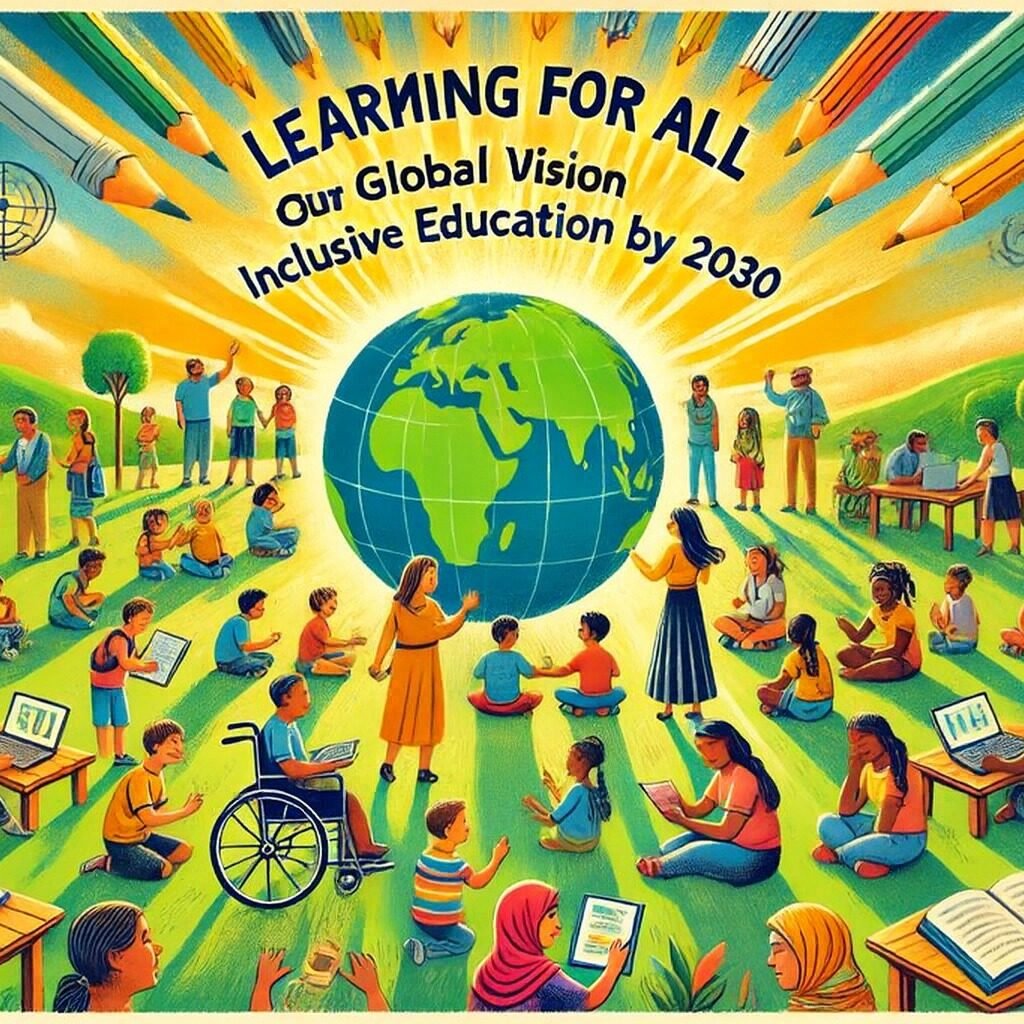
On the day that we honor the United Nations International Day of Persons with Disabilities, the following organizations came together to share our joint vision for enabling more Inclusive Education worldwide.
The global commitment to equitable and quality education for all learners, particularly those with learning differences and disabilities, stands at a critical juncture. While international frameworks like the Sustainable Development Goals (SDGs) enshrine the spirit of inclusion, realizing this vision demands a collective and strategic shift in how education systems are designed and supported. This vision statement, drawing on insights from the Education House roundtable on the margins of the 80th United Nations General Assembly, outlines key recommendations for global educational organizations, funders, NGOs, and governments to be on the path to enact truly inclusive learning environments and experiences, ensuring that by 2030, inclusive education is not just an aspiration but a reality that supports all students to thrive.
Key Barriers
Today’s education systems often face significan in t barriers to true inclusion, many of which are created and perpetuated within the systems themselves. We see inflexible curriculums and assessment measures, limited teacher training, and exclusionary school cultures. Inclusion is frequently interpreted as physical integration rather than meaningful participation. Systemic underfunding for inclusive teacher training, resources, assistive technologies, and support services further exacerbates the issue. Moreover, stigma and a lack of awareness and understanding of students with learning differences among educators, policymakers, and families contribute to marginalization. In some contexts, the challenge is compounded by a lack of effective instruction, where many policies implicitly and incorrectly assume existing education systems are conducive to learning for children with learning differences and thus focus primarily on integration.
Our Vision for 2030
By 2030, our vision is to set the stage for inclusive education to be a lived reality that enables all students to thrive, regardless of ability, background, or circumstance. This means creating learning environments where every child has the opportunity to access joyful, lifelong learning steeped in research. It necessitates a shift towards sustainable teacher capacity, policy influence, and scalable, inclusive education models, with equity as a default lens in all educational endeavors.
Recommendations for Funders:
- Invest in Long-Term Systems Change: Move beyond short-term project grants to multi-year investments that foster sustained engagement, build expertise, and support existing work in inclusion.
- Promote Collaborative Investment: Encourage and facilitate collaborative efforts among organizations through planning grants and post-collaboration capacity-building, allowing partnerships to emerge organically.
- Prioritize Catalytic Change and School and Community-Driven Models: Fund initiatives that governments may deem risky but have the potential for systemic change, and support models that are rooted in the context and needs of local communities while informed by global practices.
- Adopt Asset-Based Language and an Outcomes Focus: Shift funding frameworks from deficit-based to asset-based language, prioritizing outcomes and recognizing strengths within communities.
- Invest in Global Learning Ecosystems: Support platforms where teachers, researchers, and students can co-create and share inclusive education practices across geographies.
Recommendations for NGOs:
- Mobilize and Create Working Coalitions: Actively form local working coalitions to advocate for systemic change and embrace intersectional approaches across communities.
- Promote Local Context Understanding and Evidence Generation: Foster a deep understanding of local contexts, identify effective practices, and generate evidence and impact through case studies, stories, and data that include lived experiences.
- Foster Partnership and Community Building: Strengthen partnerships within networks, bringing people together for shared learning, and be open to collaboration with local, context-specific partners.
- Amplify Educator and Student-Led Innovations: Focus on amplifying innovations from educators and students who have personally experienced the challenges being addressed, rather than imposing top-down solutions.
Recommendations for Government and Multilateral Organizations:
- Mandate High-Quality Inclusive Education Training and Allocate Dedicated Budgets: Ensure teacher certification programs and professional development include high-quality inclusive education training, mentorship and support, and provide dedicated budgets for accessible infrastructure, assistive technology, and specialized support staff.
- Incentivize Outcomes-Based Accountability and Policy Informed by Lived Experience: Shift from compliance-based to outcomes-based accountability and develop policies directly informed by the lived experiences of individuals with learning differences.
- Host Cross-State Convenings and Fund National Center Plans: Facilitate discussions and collaborations among national education sectors and provide financial support for national education plans focused on inclusion, while also balancing complex priorities and considering long-term investments.
Setting the stage for truly inclusive education by 2030 demands a concerted effort from all stakeholders. By shifting funding paradigms, fostering collaboration, listening to educators, students, and local communities, and implementing supportive policies, we can create learning environments where every child has the opportunity to access joyful, foundational learning and thrive. This collective action will ensure that inclusive education becomes a lived reality, transforming the education landscape for generations to come.
Africa Dyslexia Organization, CAST, Global Schools Forum, Luminos, Schools2030/Aga Khan, Relay Graduate School of Education, Trevor Noah Foundation, FANA-Ethiopia Center for Learning Differences and Speech-Language Therapy, Relay Graduate School of Education
